%20--%3e%3cg%3e%3cg%20id='Layer_1'%3e%3cg%3e%3cg%3e%3cg%3e%3cg%3e%3cpath%20class='cls-1'%20d='M54.7,12.3c-1.4-1-3.3-1.6-5.5-1.6s-4.1.5-5.5,1.6c-1.7,1.2-2.5,2.9-2.5,5v11.8h5v-11.8c0-.4.1-.7.5-.9.6-.4,1.4-.6,2.6-.6s2,.2,2.6.6c.3.2.4.5.4.9v9.8c0,.5.2,1,.6,1.4.4.4.8.6,1.4.6h3v-11.8c0-2.1-.8-3.7-2.5-5Z'/%3e%3cpath%20class='cls-1'%20d='M75.4,11.1c-1,0-1.9.4-2.5,1.1-1.5-1.1-3.4-1.6-5.5-1.5s-4.4,1.1-6,2.7-2.7,4-2.7,6.5,1,4.9,2.7,6.7,4,2.7,6.6,2.7,3.4-.5,4.8-1.5c.6.7,1.4,1.1,2.5,1.1h1.7V11.1h-1.7ZM71.2,23.2c-.9.9-1.9,1.3-3.2,1.3s-2.3-.5-3.1-1.3-1.2-1.8-1.2-3,.4-2.3,1.2-3.1,1.9-1.3,3.1-1.3,2.2.4,3.1,1.3c.9.9,1.3,1.9,1.3,3.1s-.4,2.2-1.3,3.1h0Z'/%3e%3cpath%20class='cls-1'%20d='M89.5,10.7c-1.5,0-2.8.3-4,1v-6.8h-5v24.1h1.7c1,0,1.9-.4,2.5-1.1,1.5,1.1,3.2,1.6,5.2,1.5s4.7-1.1,6.3-2.8,2.7-4,2.7-6.5-.9-4.8-2.7-6.6c-1.8-1.8-4-2.7-6.6-2.7ZM92.6,23.2c-.9.9-1.9,1.3-3.1,1.3s-2.3-.5-3.1-1.3-1.3-1.9-1.3-3.1.5-2.3,1.3-3.1,1.9-1.3,3.1-1.3,2.3.5,3.1,1.3,1.3,1.9,1.3,3.1-.5,2.3-1.3,3.1Z'/%3e%3cpath%20class='cls-1'%20d='M116.3,11.1c-1,0-1.9.4-2.5,1.1-1.5-1.1-3.4-1.6-5.5-1.5s-4.4,1.1-6,2.7-2.7,4-2.7,6.5,1,4.9,2.7,6.7,4,2.7,6.6,2.7,3.4-.5,4.8-1.5c.6.7,1.4,1.1,2.5,1.1h1.7V11.1h-1.7ZM112.1,23.2c-.9.9-1.9,1.3-3.2,1.3s-2.3-.5-3.1-1.3-1.2-1.8-1.2-3,.4-2.3,1.2-3.1,1.9-1.3,3.1-1.3,2.2.4,3.1,1.3c.9.9,1.3,1.9,1.3,3.1s-.4,2.2-1.3,3.1h0Z'/%3e%3cpath%20class='cls-1'%20d='M157.2,11.1c-1,0-1.9.4-2.5,1.1-1.5-1.1-3.4-1.6-5.5-1.5s-4.4,1.1-6,2.7c-1.8,1.8-2.7,4-2.7,6.5s1,4.9,2.7,6.7,4,2.7,6.6,2.7,3.4-.5,4.8-1.5c.6.7,1.4,1.1,2.5,1.1h1.7V11.1h-1.7ZM153,23.2c-.9.9-1.9,1.3-3.2,1.3s-2.3-.5-3.1-1.3-1.2-1.8-1.2-3,.4-2.3,1.2-3.1,1.9-1.3,3.1-1.3,2.2.4,3.1,1.3c.9.9,1.3,1.9,1.3,3.1s-.4,2.2-1.3,3.1h0Z'/%3e%3cpath%20class='cls-1'%20d='M164.6,10.6c.8,0,1.5-.3,2.1-.9.6-.6.9-1.3.9-2.1s-.3-1.5-.9-2.1c-.6-.6-1.3-.9-2.1-.9s-1.5.3-2.1.9c-.6.6-.9,1.3-.9,2.1s.3,1.5.9,2.1c.6.6,1.3.9,2.1.9Z'/%3e%3c/g%3e%3cpath%20class='cls-1'%20d='M130.2,24c0,0-.2,0-.2.1-.3.2-1.8.3-2.3.3s-1.1-.1-1.4-.4c-.2-.2-.3-.6-.3-1.2v-6.8h2.4c.5,0,1-.2,1.4-.6.4-.4.6-.8.6-1.4v-3h-4.3v-1.6c0-.5-.1-1-.4-1.4-.7-1.1-1.7-1.6-2.8-1.6h-1.7v16.4c0,1.9.6,3.5,1.9,4.7,1.2,1.2,2.8,1.8,4.8,1.8s1.8,0,2.6-.2v-5.3Z'/%3e%3c/g%3e%3crect%20class='cls-1'%20x='162'%20y='11.6'%20width='5'%20height='17.6'/%3e%3cpath%20class='cls-1'%20d='M139.6,26.1c0,1.8-1.5,3.3-3.3,3.3s-2.6-.2-2.8-.2c0,0-.5-2.2-.5-3.1,0-1.8,1.5-3.3,3.3-3.3s2.8.1,3,.4c.2.4.4,2,.4,3Z'/%3e%3c/g%3e%3cpath%20class='cls-1'%20d='M29.3,17.5c-1.9,0-3.5,1.3-3.9,3h-.3c-2.8,0-5.3,1.2-7,3.1v-4.9c0-3.3.5-4.5,3.2-4.6.5,1.6,2,2.7,3.8,2.7s4-1.8,4-4-1.8-4-4-4-3.3,1.2-3.8,2.9c-1.3,0-2.3.3-3.1.7v-4.6c1.6-.5,2.7-2,2.7-3.8S19,.2,16.8.2s-4,1.8-4,4,1.2,3.3,2.9,3.8v4.6c-.8-.5-1.9-.7-3.3-.8-.5-1.7-2-2.9-3.8-2.9s-4,1.8-4,4,1.8,4,4,4,3.2-1.1,3.8-2.7c0,0,0,0,0,0,2.8,0,3.3,1.1,3.3,4.6v4.9c-1.7-1.9-4.2-3.1-7-3.1h-.7c-.4-1.7-2-3-3.9-3S0,19.3,0,21.5s1.8,4,4,4,3.1-1,3.7-2.5h.9c3.9,0,7,3.1,7,7v1.6h-4.2c-.7,0-1.2.5-1.2,1.2s.5,1.2,1.2,1.2h10.9c.7,0,1.2-.5,1.2-1.2s-.5-1.2-1.2-1.2h-4.2v-1.6c0-3.9,3.2-7,7-7h.5c.6,1.5,2,2.5,3.7,2.5s4-1.8,4-4-1.8-4-4-4ZM25,11.4c.9,0,1.6.7,1.6,1.6s-.7,1.6-1.6,1.6-1.6-.7-1.6-1.6.7-1.6,1.6-1.6ZM8.6,14.5c-.9,0-1.6-.7-1.6-1.6s.7-1.6,1.6-1.6,1.6.7,1.6,1.6-.7,1.6-1.6,1.6ZM4.1,23.1c-.9,0-1.6-.7-1.6-1.6s.7-1.6,1.6-1.6,1.6.7,1.6,1.6-.7,1.6-1.6,1.6ZM16.8,5.7c-.9,0-1.6-.7-1.6-1.6s.7-1.6,1.6-1.6,1.6.7,1.6,1.6-.7,1.6-1.6,1.6ZM29.3,23.1s0,0,0,0c0,0,0,0,0,0,0,0-.1,0-.2,0,0,0,0,0,0,0-.8-.1-1.3-.8-1.3-1.5s.6-1.5,1.4-1.6c0,0,0,0,0,0,0,0,0,0,0,0s0,0,0,0c0,0,0,0,0,0,.9,0,1.6.7,1.6,1.6s-.7,1.6-1.6,1.6Z'/%3e%3c/g%3e%3c/g%3e%3c/g%3e%3c/svg%3e)

Planting trees is the start - an operating system is what turns ambition into managed, verifiable outcomes at scale.
Ecosystem restoration has moved from the margins of environmental policy to the center of global climate and biodiversity strategies. Governments, companies, and financial institutions increasingly recognize that restoring natural systems is essential to long-term resilience.
And yet, despite this progress, restoration outcomes vary widely. Projects that look sound on paper produce unexpected results in the field. Target ecosystems fail to establish; planted stands collapse; monitored sites show apparent progress while underlying systems continue to degrade.
Ecosystems are not static objects that can be fixed through a sequence of planned interventions. They are dynamic, interconnected systems in which changes in one component propagate in ways that are often non-linear, sometimes abrupt, and rarely predictable from isolated observations. Over 80% of mangrove restoration projects fail (Global Mangrove Alliance, 2023). The structural reason is consistent: programs are built on the wrong model of nature.
This is a systems problem. And systems thinking - the discipline of understanding how parts interrelate, how feedback loops generate emergent behavior, and how interventions can produce unintended consequences - is the lens through which restoration practice needs to be redesigned.
From static plans to adaptive systems
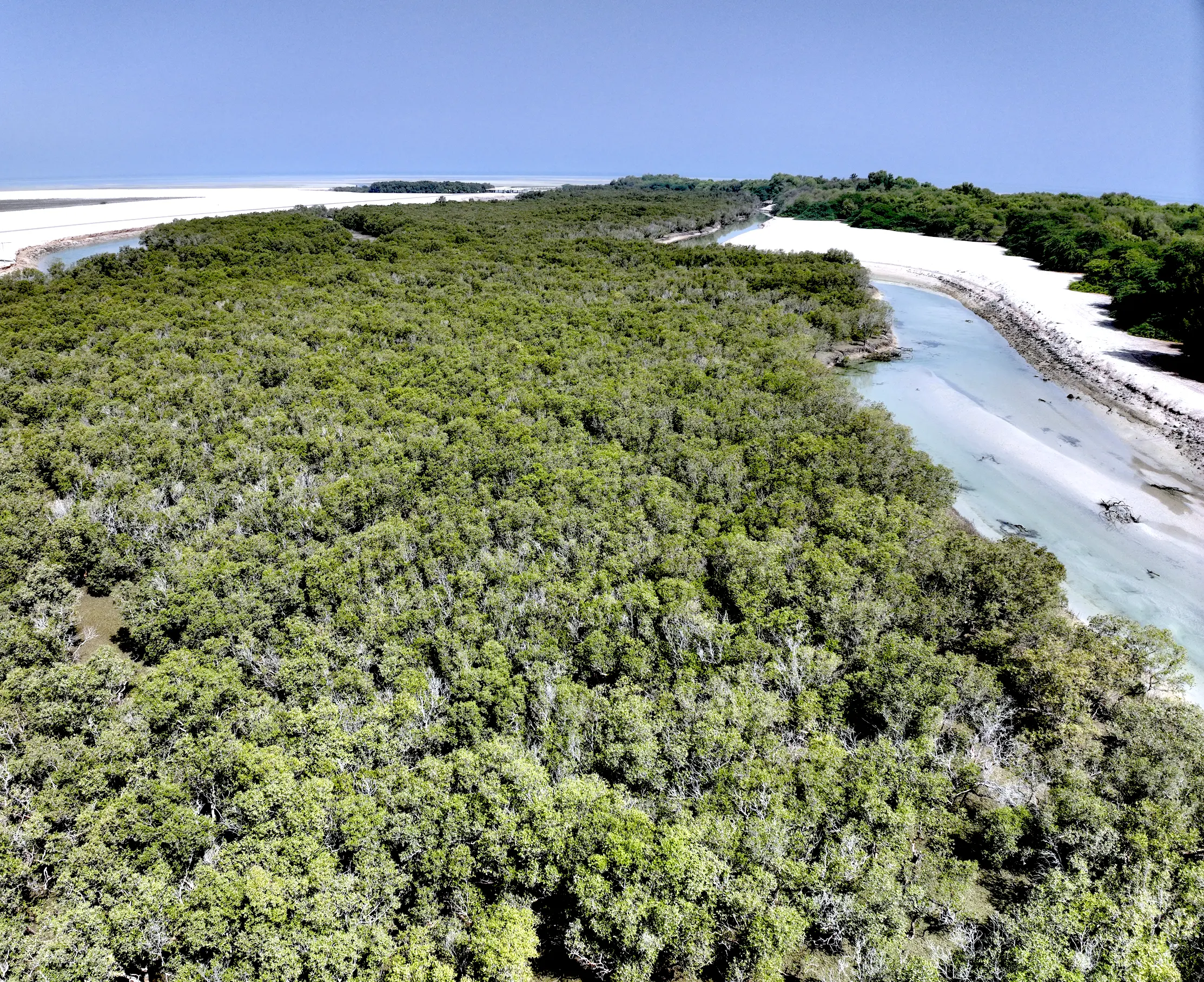
Before any mangrove field intervention, we build a detailed picture of each site through desktop studies, GIS analysis, UAV mapping, and targeted sediment, soil, and hydrological assessments. These inputs are used to model habitat suitability and the key drivers of long-term persistence, especially tidal connectivity, inundation regime, sediment dynamics, elevation, and salinity. The goal is to identify where mangroves are likely to establish and sustain over time, not simply where planting is possible today.
This scientific foundation informs all downstream decisions, from species selection to deployment timing and monitoring design. It reduces risk, improves the likelihood of establishment and longer-term persistence, and ensures restoration investments are aligned with long-term ecosystem resilience.
Once site conditions are defined, restoration moves into the field. Field teams navigate tidal mudflats guided by spatial data. Drones support the deployment of propagules or seed where hydrology and substrate suitability are already confirmed, improving coverage and repeatability. Monitoring frameworks track establishment progress , growth, biodiversity return, and ecosystem function. This approach allows restoration to be both precise and scalable - applying the same scientific logic consistently across large and often inaccessible landscapes.
A collaborative approach
When these capabilities are designed as a continuous loop rather than a sequence of discrete steps, something fundamental changes: the ecosystem itself becomes a source of intelligence.
Most restoration efforts are still organized around the project: a defined site, a defined intervention, a defined budget, and a report at the end. But the project is the wrong unit of analysis for ecosystems. A mangrove stand does not recognize the boundary of a restoration concession. Sediment dynamics, tidal hydrology, salinity gradients, and species interactions operate across landscapes and time scales that no single project can fully encompass. When a planted stand fails three years after a project closes, it is an information architecture problem - the system had no way of seeing the failure coming. The project was completed - the ecosystem just did not cooperate.
This is the core mismatch. Ecosystems are continuous systems, but restoration is being managed as a series of discrete events.
The language of operating systems is useful here precisely because it shifts attention from individual applications - specific projects, specific interventions - to the underlying infrastructure that makes them function reliably at scale.
An operating system for restoration would do what good operating systems always do: manage resources intelligently, maintain continuous awareness of system state, respond to signals in real time, and provide a consistent platform on which specific actions can be planned, executed, and evaluated. NabatOS delivers this architecture across six integrated stages: Data Capture, Assessment, Planning, Restoration, Monitoring, and Verification. Each stage feeds the next - no data is siloed; no intervention evaluated in isolation. In ecological terms, continuous observation through satellites, drones, and field sensors convert landscapes into living data systems. AI-supported analysis connects what is happening across space and time, revealing patterns, early stress signals, and recovery trajectories that episodic surveys miss. Decision support tests interventions against multiple failure conditions rather than a single expected outcome. Verification is not a reporting exercise at project close, but an ongoing function embedded in how the system operates from day one.
Teams can detect problems early, adapt to interventions, and accumulate knowledge that improves every subsequent decision. This way, restoration stops being a series of bets placed in the dark and starts functioning as a managed, learning system.
Beyond the field
The case for building this kind of infrastructure is economic and institutional. Global investment in nature-based solutions currently stands at roughly $133 billion [ND1.1]annually, which is less than one-third of the $536 billion (UNEP State of Finance for Nature, 2026) estimated to be needed by 2030. The gap is not simply a shortage of capital but a shortage of confidence: the justified confidence that a given investment will produce outcomes that are real, durable, and verifiable. Governments cannot commit to long-term restoration strategies without knowing whether previous interventions are holding. Carbon markets cannot price blue-carbon credits without consistent, defensible data on sequestration. Private investors will not follow without the kind of transparency they expect from any other asset class.
An operating system for restoration makes that confidence possible. NabatOS addresses this directly. For investors, it provides continuous outcome verification in the form of a multi-year data record that is independently auditable at any point in the program lifecycle, not only at project close. For governments, it provides the data lineage needed to demonstrate, three or five or ten years into a national program, that the investment is holding and that the reporting reflects what is happening on the ground. Nabat’s work with the Environment Agency - Abu Dhabi covers more than 20,000 hectares under AI-led monitoring, with millimeter-resolution aerial surveys generating a continuous, independently auditable record of ecosystem change across a ten-year national program (2024-2033). That record is the difference between a program that can attract sustained capital and one that cannot. No other platform combines proprietary multi-modal data capture, a geospatial AI foundation model, and in-house ecologist validation across coastal, marine, and dryland environments at this scale.
The infrastructure exists. NabatOS is operational. The question for governments designing national restoration programs, for corporates building credible nature strategies, and for project developers seeking long-term defensibility, is whether their programs are built to last.
For governments designing national restoration programs. Governments building toward national biodiversity or net-zero targets can see how NabatOS has been deployed and how multi-year digital MRV changes the quality of reporting to international frameworks. We would be glad to walk you through it.
For corporates building nature strategies. Nature commitments subject to TNFD, SBTN, or voluntary biodiversity standards stand or fall on the quality of the underlying monitoring infrastructure. We can show you what that looks like in practice.
For project developers seeking long-term defensibility. Restoration projects that need to attract institutional capital and demonstrate durable outcomes depend on the evidentiary record behind them. The record NabatOS generates is what makes a program bankable. Get in touch.